Category: Designing

Designing is a  process that in part requires opening one’s mind to new ideas and ways of creating. This post will be of interest to those who design in quilting.

About the Quilt Artist

My art quilts are all about the quilt artist  creating abstract, whimsical or impressionistic pieces.  Inspiration comes from the natural world as well as from Mexican and Native American influences. My materials of choice are often redirected fabrics from the San Francisco Design Center and found objects.  Art quilts free me to play with color and texture. My technique, Scribble Quilting allows me to create movement on many of my pieces.

"Fashion

TWO INSPIRATIONAL ARTISTS

I owe some of my inspiration to two artists from Santa Cruz County, California. Meri Vahl, an award winning art quilter has been recognized nationally for her work. Teacher of the fabric layering technique, she was patient. Understanding that each student brought individual strengths, weaknesses and abilities.  Ellen edith;friend, art quilter, fabric designer and artist extraordinaire made whimsical, personal quilts. Her influence lives on well beyond her life.   I have great appreciation for these two local leaders of the art quilt world.

SAQA (STUDIO ART QUILT ASSOCIATES)

I am proud to be part of an evergrowing group of art quilters.  SAQA started by Yvonne Porcella in Northern California in 1989. It has grown to an international organization.  Art quilters have transformed the quilt into a 21st Century art form. I continue to explore new forms and ways of working with unusual materials on this  journey.

ABOUT THE ARTIST,BIO

I was born and raised in Palo Alto, California. In high school I studied sewing and clothing construction for two years. I continued to sew much of my wardrobe. In 1974,I took my first quilting class at a neighborhood fabric store. Over the years, I continued to sew clothes and make quilts for my family. I stopped counting bed quilts at 300. After teaching 30 years in Watsonville as a bilingual teacher, I retired to spend more time on creating art quilts.

MY FIRST ART QUILT
Homage to a Dancer,45″ x 56″

In 2008, I made my first art quilt, Homage to a Dancer. It reflects  my participation in Los Méxicas,the University of California,Santa Cruz ballet folklórico group.

A STUDIO IN THE ART CENTER

In May of 2016, I opened a studio in the Santa Cruz Art Center, 1001 Center St. Downtown Santa Cruz. I have space to work and display my work. For First Fridays and Open Studios, I fill the lobby with art. In June, 2019  New York Art Center accepted my work into their gallery. 7 Franklin Place, TRIBECA, New York City.

AWARD WINNING ARTIST
Great Blue Heron at Dusk,31″ x 25″

Great Blue Heron at Dusk entered into an art show in 2010. The following year it won a merit award at the Olive Hyde Art Gallery in Fremont,California.
In 2013, Visions of New Mexico won third place in the Neo Membreno Vessels 2013 Show at the Western New Mexico University Museum in Silver City, New Mexico.

  • Everything I Know about Thread for Quilting

    Let’s talk about everything I know about thread. Notice I didn’t say everything there is to know about thread.I am not a thread expert. But I have been sewing clothes and quilting for decades.I will be the first to admit that there is a lot that I don’t know about thread. I can not say which type of thread is perfect for which project. Some shiny metallic threads are too fussy to work with for my liking. I might couch them from time to time.A special needle helps if sewing them by machine.

    Here is a large a large  basket of new and old  threads.
    a basket of threads

    What I Know

    Thread colors and fabric colors are like fashion.Styles, shades and hues change often.Greens may always seem available. Yet the shades change. If you want a forest green It may not always be available. This I learned yhe hard way. My preschool daughter wanted a forest green dress when that color was out of style. Currently, tealish or bluish greens are currently popular.

    All Brands are Good.

    All brands make good quality threads. After 50 years of sewing I have not found thread brands that are not good quality. Individual threads may have different uses. Some may be easier to work with on your particular sewing machine than others.When I bought my Husquarva Lily over 20 years, Guttenberg thread was recommended for use with my machine. I used that thread with mixed success. I kept using Guttenberg because of the recommendation. Yet, while doing donation quilts, I was given some other brands to use. It was amazing to see how much easier this other brand was to use. The stitches looked better also. I learned that some machines work better with some threads. Of course, paying a company for a recommendation is not unheard of. Get to know your machine and what it likes for the type of sewing that you do.

    Free Motion Quilting

    A box of Aurifil brand threads for free motion quilting and other sewing.
    Aurifil Threads for free motion quilting and other sewing.

    For free motion quilting I am very fussy about the thread I use. I find Aurifil brand improves the quality of my work when I am free motion quilting. It can be used for piecing or general sewing. At times it can seem pricey so I try and save it for those particular projects. I will say that there is a lot of thread on the spool because the thread is very thin. So it isn’t as expensive as it seems. Once, I pieced and quilted a king size bed with only one spool of thread.

    Old Thread

    Don’t be afraid to use old spools of thread. The quality is amazing. The colors unique. If it breaks easily in your machine, save it for hand basting. I acquire old thread whenever possible to maintain a wide range of thread colors. Test the thread to see if it is good. Pull on the thread. Does the thread break easily when you pull on it? Then it is no good. I have bought new spools of thread that failed this test. Build up a resource of thread colors just like a fabric stash.

    I avoid polyester threads but sometimes it is not possible. Depending on your project polester may be fine. If you are making an heirloom project, definitely use 100% cotton thread. Yet I have come to the conclusion that most of my projects will last 20-30 years. Polyester thread is fine for those projects. Quilting is supposed to be fun. Not stressing over little details of the quilting police.

    Chartreuse Thread?

    At a flea market I bought a chartreuse spool of thread. I surprised even my self. Greenish yellow? What was I thinking? It quickly became my favorite thread to quilt with. Chartreuse on black fabric is stunning! Move out of your confort zone.Try unusual or different colors than what you are unaccustomed to using. One never knows how a color will look once sewn or placed on another fabric. It changes. Our eyes also see colors diffferently. Let the fun begin. Try a different and unexpected color of thread for your next quilting project.

    All I Know About Thread

    As you can see I am not an expert on thread.Yet I do have a few suggestions to make. Don’t be afraid to use old spools of thread. Most of them are perfectly fine. Unless the threads break. Polyester is fine to use for some projects. For family heirlooms I would stick to 100% cotton fabric and thread. Practice helps. Get to know your machine and what works best for the type of sewing that you do. Some unique threads like metallic ones need a special needle. Relax and have fun.

    http://www.saqa.com/

    https://annbaldwinmayartquilts.com/2022/07/art-solutions-came-to-me-in-a-dream/
    https://annbmayartquilts.etsy.com/

  • Need Help? Try These Low Tech Quilting Hacks

    Need Help? Try These Low Tech Quilting Hacks

    Low Tech Quilting Hacks

    Try these low tech quilting hacks to make to make quilting tasks easier. This post is about my favorite tools that I often  use in my studio. Redirecting materials are a major motivating factor in my art. It so happens that it affects my low tech quilting hacks as well.

    Threading the Needle

    My regular sewing foot has a white plastic piece that holds it together. A bit of the white forms a background that allows for the ease of threading  the needle. For years, I sewed clothing. Yet, never noticed this because I had no need to change the foot. As soon as I started quilting and began to use different feet, I noticed that threading the needle became more  difficult.

    What  Had Changed?

    I couldn’t figure out what had changed. It took me a while, the small white background was not longer there. So I recreated the white by using a small piece of white paper. I now keep a particularly stiff piece of white paper close at hand. For easy threading of the needle,  I slip the paper behind the needle. When I  use the walking foot or darning foot for free motion quilting, I can see the needle’s hole much better.

    low tech quilting hack
    a useful white piece of paper to aide threading a needle

    Easing of Fabric through the Feed-A Low Tech Quilting Hack


    Many years ago I received a stick that looks like an orange stick used for nail care. Suzanne Cam gave them away as part of  a quilting workshop. This tool has now become an indespensible tool. I use it often to grab threads, to gently guide fabric smoothly through the feed when necssary.

    Moving Small Pieces- A Low Tech Quilting Hack

    I also use the stick to move small pieces of fabric. For the fabric layering technique,I create my art flat on a table. I place the backing fabric  down first. Then I lay the batting on top.Finally,  I create the scene. At times this requires a gentle movement of small pieces of fabric or yarn. I use the stick for this. Nothing else creates a smooth curve or allows me to control the placement of  small items or details.

    low tech quilting hack
    a multiuse well used stick

    Tiny Globs of Glue

    At times I  need to glue items to my fiber pieces. Often I only need  the  tiniest bit of glue not a glob of glue that might show. When my studio was in my home, I would use a plate from the kitchen to put the glue on. After moving to my studio,no plates were readily available.

    Making Do

    I flipped over the  3 ” plastic cap from the can of starch to use. To control the smallest bit of glue, I use a large needle or hat pin. When finished I can easily wipe off the residue of  white glue .  The pin or needle is then ready for its original intended use.

    low tech quilting hack 3
    Plastic caps to control globs of glue

    A Design Wall

    I use a design wall to create my abstract pieces of art. It is essential for me to have a large space available. I would recommend at least 60″ high and wide. My studio design wall is about 90″ by 90″. I covered the wall with a  piece of white flannel fabric. It is held in place by push pins. Portability is not an issue for me. Other quilters  will swear by their expensive design walls. Don’t be fooled! Simple can be just as effective!

    my large white flannel design wall design, low tech quilting hack
    My large white flannel design wall design

    True Confessions Time!

    I am not an early adopter nor a gadget person.  Quality standard tools and materials are necessary. These hacks are very low tech. Whatever works! For those still reading this post, I expect to hear  a chuckle or two or daresay I, some laughing out loud at their simplicity.  What simple hacks do you use? Please share.

    https://annbaldwinmayartquilts.com/2020/04/forging-your-own-art-path/

    More reading that may interest you.

    https://annbaldwinmayartquilts.com/2020/03/fabric-layering-technique-another-look/

    https://so-sew-easy.com/quilting-hacks-for-beginners/

    https://www.etsy.com/shop/annbmayartquilts/

  • Need Punch? Add Color to your Art Quilts

    Need Punch? Add Color to your Art Quilts

    Adding Color to your Art Quilts

    Color is probably the art element that attracts and motivates most artists to begin work. For most people it is the most engaging aspect. For my take on this subject, I am going to focus on how I choose to adding color to my  abstract art quilts. In general, I  chooose 3-4 colors to work with. Then I find the range of hues from light to dark to add for balance and interest. I often use bright colors while I find a pale palette of beiges and whites to be very calming. I work on a large white flannel design wall.

    To begin, Where do I get my ideas? How do I decide on which colors I want to work with?  Most of my materials are from FABMO, a non profit that gets castoff materials from designers.  Swatches of a wide range of colors with slight variations provide a lot of choices. Here are some ideas I have inspired me to get started.

    A Photograph

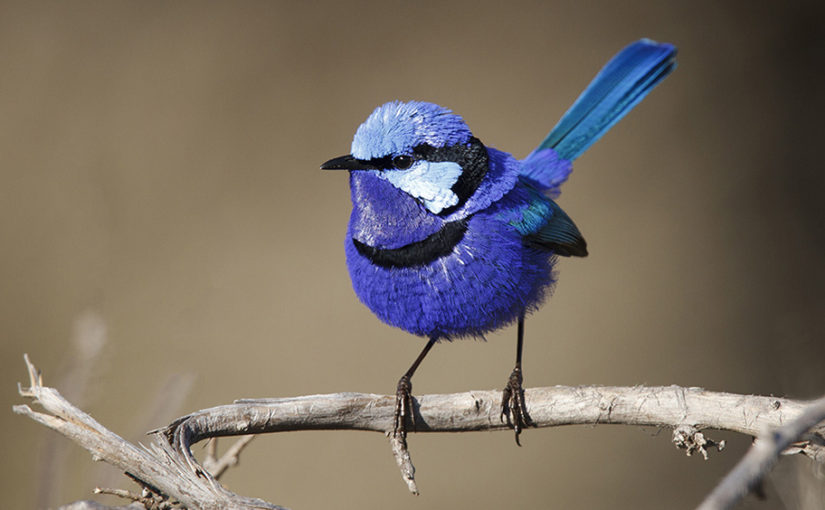
    A friend sent me this photograph of a colorful bird from  Australia. Rarely do I work from photographs. I will not be using the bird however, the hues of purple,blue and black will be in an abstract art quilt in the near future.

    Look Down

    While working on a piece,I tossed the extra fabric in a box on the floor next to me. I did this repeated. At the end of the day, I looked down and saw these wonderful grey and lime green colors together. I gathered them up and put the in a special place to work on later. This was the piece inspired by leftovers. May I note that I usually don’t use these colors.

    Lingering Fog,34" x 34"  86 x86 cm 2019, a grey,white and lime green abstract art quilt
    Lingering Fog,34″ x 34″ 86 x86 cm 2019

    Using Up Materials

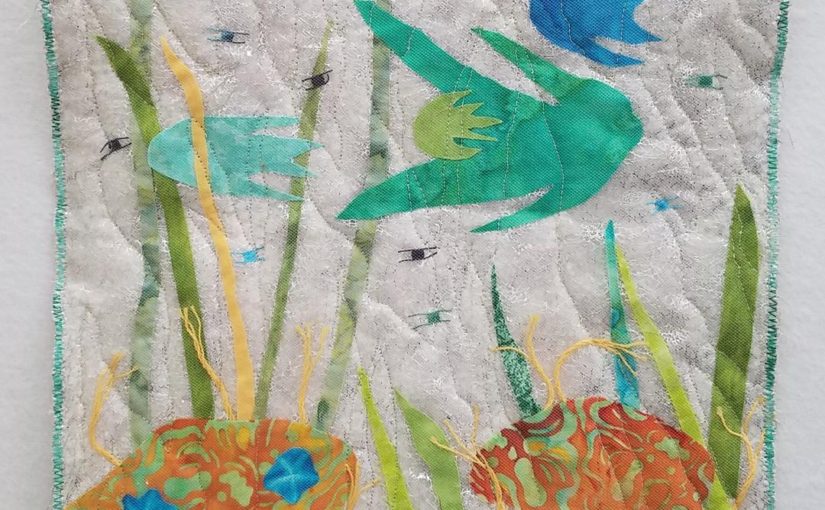
    Sometimes I just start a project with materials or colors that I want to use up.  I might have too big a piece of fabric or too much of one color. Some artists might find  this idea very unorthodox or even unsettling. When I started City Lights, I had a pile of blue fabric that I wanted to diminish. Sand Between My Toes allowed me to make use of whites and beiges. Sea Turtles is not an abstract art quilts but I had a large piece of blue synthetic fabric that I used for the background. The turquoise plants are also created from fabric I wanted to use up.

    City Lights, lots of blues and purples with pops of other colors, 24" x 22"
    City Lights, a fabric art quilt,24″ x 22″
    Sea Turtles,an underwater fantasy art quilt,Sea Turtles 35" x 23 " 2014
    Sea Turtles 35″ x 23 ” 2014
    an abstract art quilt in pale colors
    Sand Between My Toes

    Use the Palette of a Commercial Piece of Fabric

    A fabric friend  suggested this to me several years ago. I have to admit I couldn’t wrap my mind around this idea for a long time. Go to a fabric store. Look at the colors on the commercial fabrics. Very experienced designers work to create these prints. Choose a palette that you would like to use. You don’t need to use  the fabric just let the colors inspire you.

    In my abstract art quilt, Spring Break I did use some of the fabric. However, the process of  chosing the materials was driven by the  colors of the original piece of redirected linen. I looked for complementary colors  from the fabrics I already had.

    Spring Break, an abstract art quilt of blues, yellows and green
    Spring Break
    Multicolored Blue Linen Fabric
    I built the fabrics around this piece of fabric.

    In conclusion, inspiration for art can be found in many unusual places. Inspiration comes from spending time in your studio. Keep your mind open and inspiration will appear.

    Here are some other articles that you may be interested in.https://annbaldwinmayartquilts.com/2020/03/using-discontinued-fabrics/

    https://annbaldwinmayartquilts.com/2017/12/the-amazing-story-of-fabmo-how-two-dedicated-people-can-make-a-big-difference/

    https://annbaldwinmayartquilts.com/2020/01/creating-movement-in-abstract-art-quilts/

    The following  article is about Spring Break, art quilt.

    https://annbaldwinmayartquilts.com/2017/09/abstract-art-quilts-a-work-in-progress/

    https://www.etsy.com/shop/annbmayartquilts/

  • See A New Abstract Art Quilt Work in Progress

    See A New Abstract Art Quilt Work in Progress

    Abstract Art Quilt Work in Progress

    An abstract art quilt with lavander,pink, and grey colors
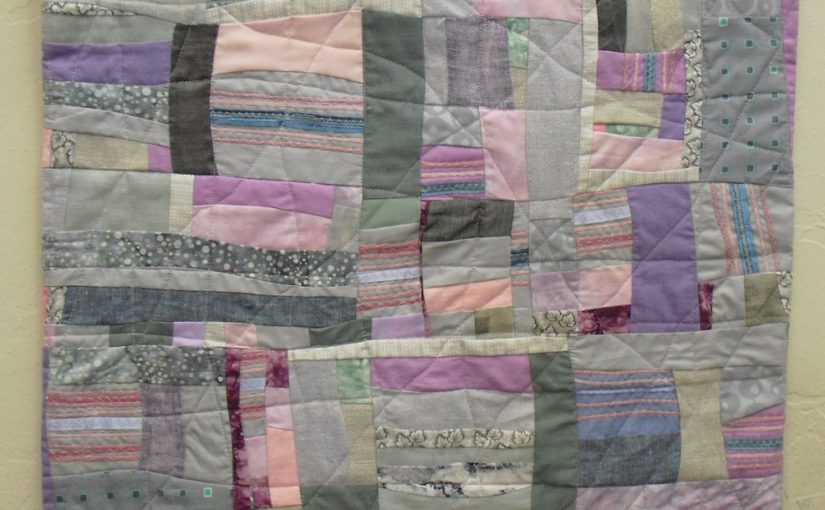
    Winter Sunset, An abstract art quilt with lavander,pink, and grey colors,the finished piece

    Abstract Art Quilt Work in Progress, Winter Sunset

    This work in progress shows the steps I follow to create an abstract piece of art. Designing my abstract art quilts begins with choosing a group of colors. Inspiration for this quilt came from the greys and pinks of a winter sunset. I pick the decorative threads that I want to work with. I choose fabric that fits into the shades of colors that I chose. This time I want the colors to blend together and hardly be noticeable. Look for the green marbled fabric I added for that purpose. Choosing mnaterials from my stash is my favorite part of the creaive process.

    An abstract art quilt with lavander,pink, and grey colors
    1. Yarn and decorative threads for couching.
    An abstract art quilt with lavander,pink, and grey colors
    2.I begin to choose fabrics.

    Couching Decorative Threads and Yarns

    Couching decorative threads and yarns to a long strip of fabric is fun. I  use little pieces that might otherwise be thrown away. Each person’s eyes will blend the colors together differently. Then I randomly cut up the strips to use as fabric. I place the fabric on the design wall. Then I move the pieces  around until I like it.

    An abstract art quilt with lavander,pink, and grey colors
    Long strips of cotton with the threads couched on them.
    An abstract art quilt with lavander,pink, and grey colors
    I cut up the long strips. They are ready to be used as fabric.
    An abstract art quilt with lavander,pink, and grey colors
    I place them on my design wall.

    Keep Colors and Textures Balanced.

    Beginning  to sew the pieces together, I  keep my eye out  to make sure that the balance of the colors and textures is good.

    An abstract art quilt with lavander,pink, and grey colors
    I start to add the other fabrics.
    An abstract art quilt with lavander,pink, and grey colors
    8. I added more fabric.

    I keep adjusting the fabrics adding and subtracting fabrics as I go. Until I get it just right in my eye’s mind.I begin sewing small pieces together.

    An abstract art quilt with lavander,pink, and grey colors
    I sew more pieces of fabric together.

    I continue sewing pieces pieces together. Here you can tell that the pieces are getting larger.

    An abstract art quilt with lavander,pink, and grey colors
    An abstract art quilt with lavander,pink, and grey colors

    I moved some other pieces around. Sewing together continued. I finished sewing or piecing the top together.. The quilt sandwich has the top, the batting and the backing fabric pinned together to quilt.

    An abstract art quilt with lavander,pink, and grey colors
    done

    I use my wacky fun scribble quilting technique to quilt the three layers together  creating an added level of movement. Scribble quilting is a technique I named. I  move the quilt side to side while quilting with a walking foot.

    An abstract art quilt with lavander,pink, and grey colors
    Winter Sunset, An abstract art quilt with lavander,pink, and grey colorsthe finished piece

    You may be interested in reading more at Studio Art Quilt Associates (SAQA) website.

    http://www.saqa.com/

    https://annbaldwinmayartquilts.com/2021/06/abstract-art-in-fabric/

    https://www.etsy.com/shop/annbmayartquilts/

  • Try Something New. Bring Your Bravery!

    Try Something New. Bring Your Bravery!

    Bring Your Bravery! Auditioning fabrics on my design wall, browns greens, beiges
    Photo 1  Auditioning fabrics on my design wall

    Bring Your Bravery! Be Brave!

    A main motivation of mine besides making stunning art is to reuse materials. Pieces of yarn and decorative threads that some people may discard become unique design elements. I couch (zigzag) them on a strip of fabric, cut them and use as fabric. Yet, sometimes there are decorative threads that one just has to buy. There is one like that in this piece. The ribbon alternates rusty orange and green with 3D native inspired tied knots. Bring Your Bravery! Be Brave!

    Choosing Colors- Be Brave!

    Choose your color scheme. I recommend three to four colors. Sort hues from light to dark in the same shades. Be brave. Experiment with different colors on your design wall. Don’t be afraid to eliminate fabrics.  Start with more material than you think you might need. Include one bright fabric that makes the piece pop.

    Creating Details Bring Your Bravery! Be Brave!

    Couch (zigzag) decorative threads on 5”wide strips of cotton. Try something new. Bring Your Bravery! Be Brave! Emphasize the art element of line by couching with thread that matches the yarn to make the sewing thread disappear. Double or triple the ply for a thicker line. Repeat four to six times using different colors and types of decorative threads.  Couch the decorative threads fairly close together about 1/8-1/4 inch apart. Leave a 1” space on each side of the fabric strip. This gives you flexibility. You can always make it smaller.

    Tucks add texture.

    Bring Your Bravery! Be Brave! Tucks add texture. Fold a 12” length or longer strip of fabric wrong sides together to create a fold. Stitch 1/8” or 1/4” close to the fold edge. Choose your thread to blend into the fabric or to stand out as a design element.    Make 3-5 tucks on the same strip of fabric. Remember to save room for the seam allowance on the sides. Press to lay flat. Cut up the strips into 4”- 8”pieces. Balance their placement on the design wall.

    Temporarily Mark your Design Wall

    Plan to make your finished artwork about 24”square.  Mark with pins the approximate size of your finished piece on the design wall as a guideline. Remember when you are putting fabric on the design wall, the finished product will be smaller. Start with fabric pieces that are a bit larger.

    Bring Your Bravery!Small strips are being sewn together.
    Photo 2 Small strips are being sewn together.

    Place the Pieces Randomly

    So, you have assembled your own “fabric” with couched decorative threads and tucks. Now it is time to mix those fabrics with others on the design wall. Bravely put the pieces up randomly and start to move the pieces around to see what goes together. What fabrics jump out at you?

    Almost all squared up. Most pieces sewn together
    Photo 3 Almost all squared up.

    Balance the  Fabrics

    Limit those to an odd number of them. Balance the different fabrics making sure that they are spread out evenly over the top. Beginners might choose to piece their top using straight lines up and down. Placing the pieces on a diagonal adds interest.  A diagonal quilt will go past the guideline pins and be trimmed into a rectangular or square.

    quilt sandwich, the three layers are put together
    step 4 quilt sandwich
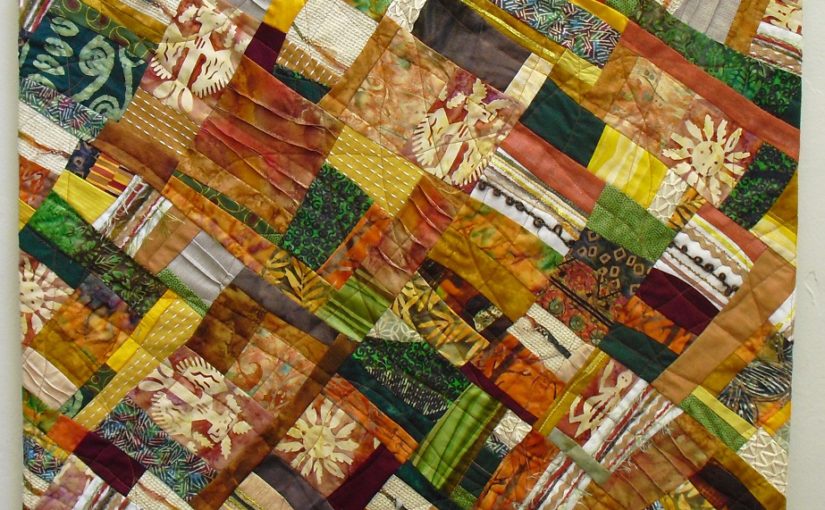
    Golds, greens and yellow fabric highlight this Native American inspired art quilt
    step 5 Sunlit Boulders,art quilt, completed

    Sew As You Go

    Show courage. Sew, cut and move fabric around the design wall. Keep cutting and sewing pieces together until it pleases you. The top doesn’t need to be totally finished to start to sew. Sew straight or curved line seams. Continue to sew pieces together into about 8” strips. Pin them to the design wall either in straight lines or on a diagonal. Allow time for this process. Trust yourself.

    A “Painful” Time

    This can be a “painful” time for an artist, if the piece isn’t coming together as one wishes it would. I find that if I don’t like a part, it gets more interesting after I cut it up and rearrange the pieces. Leave items on the design wall and return later to look at the piece with fresh eyes.
    Complete sewing the top when you are happy with it. Prepare the quilt sandwich and quilt. Scribble Quilting is fun and adds movement to your piece. Whichever way you quilt your piece, you will have an artful abstract art quilt as testament to your bravery.

    About the Author

    Ann Baldwin May lives in Santa Cruz, California. In 2012, she retired after teaching elementary school for 36 years. She has won  several awards for her work. She participates in the juried Santa Cruz County Open Studios Art Tour from her studio in the Santa Cruz Art Center.  May is a member of SAQA( Studio Art Quilter Associates). Contact her at baldwinmay49@yahoo.com or www.annbaldwinmayartquilts.com. Or visit her Etsy shop at annbmayartquilts.etsy.com

    Directions for Curved Line Piecing-optional

    Lay two pieces of 5” cotton squares on top of each other right sides up on the cutting mat. Cut a slightly curved line through both fabrics with a rotary cutter. There will be four pieces. The top of one fabric will fit the bottom of the other fabric like two puzzles pieces making the original square. Take those two pieces that fit together and sew right sides together with a ¼” seam. Only the part of the fabric going through the foot will line up to a ¼” seam due to the curve. Slightly adjust the top fabric as you move them both through the foot. Press open. This technique is very forgiving. You will be amazed at your curved line. Practice making curves of different widths.

    Advice for Beginners

    Let each person’s eye see the hues in their own way. Let go of controlling the way the colors mix together. The color of thread changes depending on the color of the fabric that it is sewn on. The color of the fabric is influenced by the color it is next to.

    When I started making art quilts, I had a lot of experience sewing clothes and bed quilts. I would think of how a traditional quilter would do something and then I would choose to do it differently.

    Consider expanding your stash to include a wider range of shades and hues.

    Tips

    It is imperative to be cautious with certain aspects of our lives, but cutting up fabric is not one of those times.

    Create texture by including fabrics other than 100% cotton. While a variety of fabric adds interest, provide some solid fabrics as a needed resting spot for one’s eyes.

    Include a bit of fabric that will pop. Shiny synthetics work well for this.

    Supplies and Materials

    Rotary blade, cutting matt, design wall(white flannel thumbtacked to the wall)
    sewing machine, batiks, found threads(decorative threads, yarns, rickrack, colored string, synthetic raffia), a variety of small pieces of cotton fabrics(fat quarter or smaller), fabrics of different textures (optional), thread, batting, cotton backing fabric, scissors, walking foot for quilting.

    https://annbaldwinmayartquilts.com/press-coverage/

    http://Art Quilting Studio Magazine, Fall issue, 2018.

    https://annbaldwinmayartquilts.com/2021/06/abstract-art-in-fabric/

  • Step By Step Instructions to Make an Abstract Art Quilt

    Step By Step Instructions to Make an Abstract Art Quilt

    This work in progress shows the step by step instructions to make this abstract art quilt, Sunlit Boulders. Featured in Art Quilting Studio Magazine, Fall issue, 2018.

    Step By Step Instructions for an abstract art quilt, browns, greens, yellow and batiks with a sourthwest feel.
    Sunlit Boulders 31″ h x 28″w

     Inspiration and Adjustments

    Sunlit Boulders is an art quilt with curved line piecing, Scribble Quilting and couched decorative yarns and threads. My first intention was  to highlight the Native American batik shown on the left on the first photo. As I chose different fabrics, I decided that I would minimize their use.  I removed more of that fabric. I was happier with the way it looked. It’s okay to change ideas in midproject if it doesn’t look or feel right to you. Follow these step by step instructions to make your own abstract art quilt. It will be uniquely yours.

    Step By Step Instructions,Photo 1. gathering fabrics
    Photo 1. gathering fabrics

    Photo 1

    I am auditioning fabrics that complement and contrast with the batik fabric. Using  strips of fabric, I couch(zigzag) a variety of decorative threads and yarns to the strips. I cut the strips apart into varying lengths without much forethought.

    Photo 2. Trying out fabrics.
    Photo 2. Trying out fabrics.

    Photo 2


    I am still auditioning fabric. I included some pieced strips left over from a previous project. Notice that I  eliminated the reddish fabric.

    Photo 3. Begin to sew smaller pieces together.
    Photo 3. Begin to sew smaller pieces together.

    Photo 3

    I start to cut up the strips of couched yarns to add to the quilt. I am trying out where I like the pieces, moving them around. Dark strips frame the piece. I begin to sew some pieces together. Figures from the batik stand out enough.

    Step By Step Instructions. Sew pieces together. Move to a different spot to create balance of fabric and color.
    photo 4 Sew pieces together. Move to a different spot to create balance of fabric and color.

    Photo 4

    Tucks are  add texture. Notice that I moved some pieces  around. I do more sewing of pieces  together.

    Step By Step Instructions,photo 5. I find problems are solved by cutting up fabric into a smaller piece.
    photo 5. I find problems are solved by cutting up fabric into a smaller piece.

    Photo 5

    I am not afraid to cut up fabric. I can always use the fabric at a later date for a different project. More tucks are added to fabrics. I eliminated some batiks symbols.

    Step By Step Instructions,Photo 6. All sewn together.
    Photo 6. All sewn together.

    Photo 6

    All pieced together and ready for batting and backing.

    Step By Step Instructions,Photo 7. A quilt sandwich when the top, the batting and the backing is ready to be quilted.
    Photo 7. A quilt sandwich when the top, the batting and the backing is ready to be quilted.

    Photo 7


    Scribble Quilting is complete. Edges need to be trimmed and cut straight.

    Photo 8 Finished.
    Photo 8 Finished.

    Photo 8

    The finished art quilt represents my mantra of color, texture, and movement.

    You may be interested in reading more.

    https://annbaldwinmayartquilts.com/2017/09/inspiration-from-one-fabric/

    http://Inspiration from One Fabric

    https://annbaldwinmayartquilts.com/2020/04/an-abstract-art-quilt-sunset-through-the-forest/

    https://stampington.com/art-quilting-studio-autumn-2018/

    https://annbaldwinmayartquilts.com/2021/06/abstract-art-in-fabric/

    https://annbaldwinmayartquilts.com/2020/01/creating-movement-in-abstract-art-quilts/

    https://www.etsy.com/shop/annbmayartquilts/

<1001centerstreetsantacruzca>